QianYin ManYu is an AI voice platform that produces voiceover with 1200+ AI voices and adds translation dubbing, speech recognition, 10-second voice cloning and tools such as audio extraction and format conversion.
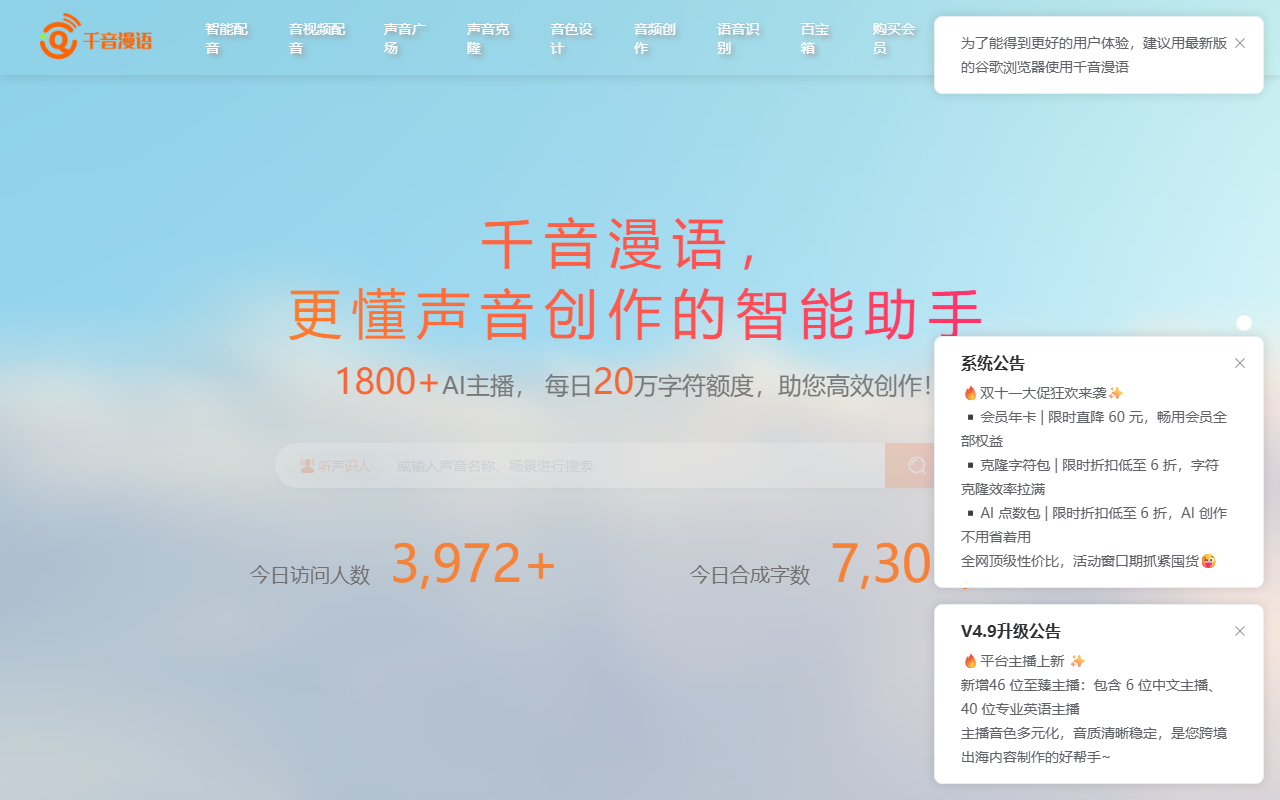
QianYin ManYu: one platform for AI voiceover, translation and voice cloning
QianYin ManYu is an AI voice-creation assistant from Beijing Yisheng Technology, built around turning text into speech. AI voiceover, audio and video translation dubbing, speech recognition, voice cloning and a set of audio utilities sit on one platform, covering chat dialogue, audiobooks and advertising.
The workload it targets is repetitive: one script in several voices, one video in several languages, one interview turned into editable text. Per the source material the platform offers 1200+ AI voices, nearly 20 tuning controls, speech recognition quoted at up to 95% accuracy, and voice cloning from a 10-second sample.
Main capabilities
- AI voiceover: Over 1200 AI voices across languages and timbres, with nearly 20 controls for polyphonic characters, pauses, emphasis and local speed changes — suited to dialogue, audiobooks and ads.
- Audio and video translation dubbing: Large-model subtitle translation plus multilingual dubbing, so one video can become several language versions in a single pass.
- Speech recognition: Speech-to-text quoted at up to 95% accuracy, covering dozens of languages for transcription work.
- Voice cloning: A 10-second sample reproduces a voice; the source claims support for more than 100 languages with natural rhythm.
- Audio toolbox: Extraction, format conversion, silence detection, automatic timing, and separation of vocals from background music in one place.
How to start
- Open qianyin123.com and pick the module that matches the job.
- Voiceover: paste the text, choose a voice, then adjust speed, pitch, pauses and the reading of ambiguous characters.
- Translation dubbing: upload the file and pick a target language; subtitles are translated and voiced automatically.
- Speech recognition and cloning: upload audio or record live for transcription, or upload a 10-second sample to build a cloned voice.
- Review, correct anything the model got wrong, then export for audiobooks, video or advertising.
Where it fits
- Audiobooks: a consistent voice across long texts without booking studio time for every title.
- Localising video: one finished cut delivered in several languages, subtitles and dubbing together.
- Ads and short video: the same script in several voices to test which one lands better.
- Interviews and meetings: transcription first, editing afterwards.
Limits to keep in mind
- The 95% figure is the platform's own claim. Results vary with language, accent, room acoustics and background noise, so important copy still needs a human check.
- Cloning someone else's voice requires their permission, and the platform's rules and local law apply as well.
- Subtitle segmentation, terminology and colloquial phrasing in translated video usually need a pass from a human editor, especially in specialist fields.
- The source material says nothing about pricing, free quotas, commercial licensing or export formats; confirm those terms on the platform before relying on it.
- Voice counts and language coverage change between versions, so treat the numbers as a snapshot rather than a specification.
FAQ
What can QianYin ManYu do?
Five kinds of voice work in one platform: AI voiceover, audio and video translation dubbing, speech recognition, voice cloning, and utilities such as audio extraction and format conversion.
How long a sample does cloning need?
The stated requirement is a 10-second recording. Cleaner audio with less background noise generally produces a closer match.
Is the 95% accuracy guaranteed?
It is a quoted best case. Actual results depend on language, accent and noise, so contracts, medical or legal content should be proofread by a person.
Can the output be used commercially?
The source does not state the licensing terms, so check them on the platform. Cloned voices also need consent from the person whose voice it is.
Frequently asked questions
What can QianYin ManYu do?
Five kinds of voice work in one platform: AI voiceover, audio and video translation dubbing, speech recognition, voice cloning, and utilities such as audio extraction and format conversion.
How long a sample does cloning need?
The stated requirement is a 10-second recording. Cleaner audio with less background noise generally produces a closer match.
Is the 95% accuracy guaranteed?
It is a quoted best case. Actual results depend on language, accent and noise, so contracts, medical or legal content should be proofread by a person.
Can the output be used commercially?
The source does not state the licensing terms, so check them on the platform. Cloned voices also need consent from the person whose voice it is.