TicNote is a recording and note-taking tool that combines AI voice transcription, multilingual translation and thinking assistance. It is used for meeting notes, phone calls, cross-border communication, language learning and project knowledge management.
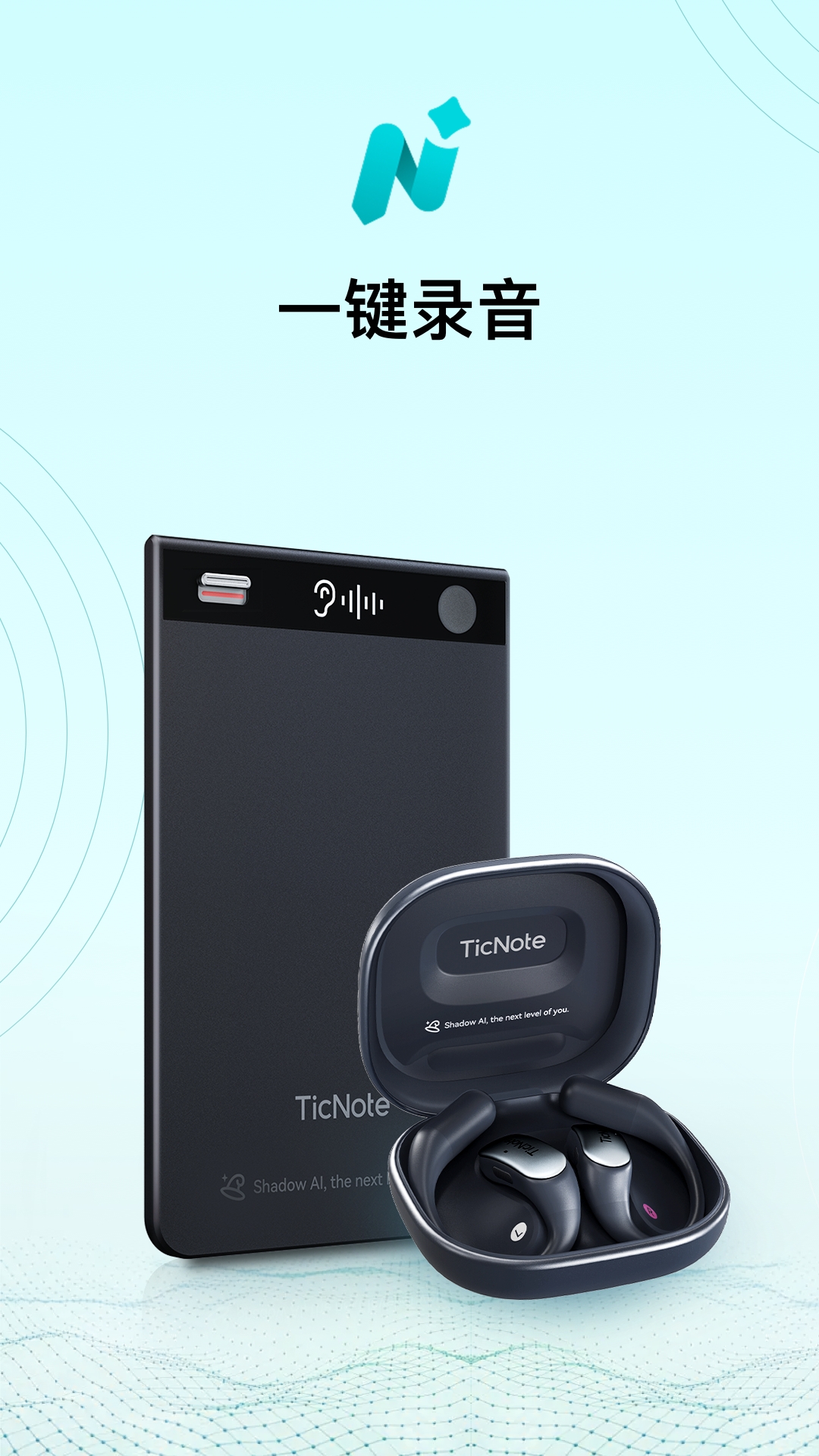
TicNote: AI Voice Transcription and Thinking Assistant
What is TicNote?
TicNote is an AI voice transcription and thinking-assistant tool. Recording, transcription, translation, summarization and file organization all live in one workflow. It first turns the audio of a meeting, phone call or interview into searchable text, then builds on that text to extract key points, write summaries and suggest directions for further thinking. Notes are not only stored, they stay usable.
Main features
- One-tap recording: hold for two seconds to start recording, so you can begin quickly at the start of a meeting, call or interview and are less likely to miss key moments.
- Accurate transcription: a built-in AI speech recognition system with transcription accuracy stated at up to 98%, with results that are easy to read and share.
- Multilingual translation: supports translation across more than 120 languages and dialects for meeting notes, cross-border communication, language learning and travel abroad.
- Shadow AI: automatically summarizes meeting points, captures flashes of inspiration, supports on-demand questions and voice interaction, and learns user habits to offer more relevant angles.
- Professional summaries: analyzes meeting content and produces concise summaries that highlight key points and action items.
- Project management: attach and organize multiple files for each project, building a smart project knowledge base that is easy to advance and revisit.
How to use it
- Open the app and hold the record button for two seconds to start.
- After recording, wait for the AI to finish transcription, then read and proofread the text.
- For cross-language use, choose a target language for translation.
- Let Shadow AI summarize key points, generate a meeting summary and extract action items.
- Keep the conversation going with questions or voice, based on the transcribed content.
- Group related recordings and files into a project to gradually build a knowledge base.
Use cases
- Meetings and interviews: record in-person or online meetings and quickly produce written records and summaries.
- Phone calls: keep the key points of a call instead of relying on memory.
- Cross-border communication and language learning: understand foreign-language content through translation.
- Idea capture: speak ideas out loud at any time and let the system organize them.
- Project knowledge: keep recordings, transcripts and documents together in one project space.
Limitations and notes
- The 98% accuracy figure comes from the source material; actual results vary with accent, background noise and overlapping speakers. Review important content manually.
- Pricing, supported platforms and storage limits are not provided in the material; check official channels before use.
- For sensitive or confidential content, confirm that recording and cloud processing are compliant and obtain consent from the parties involved.
- AI-generated summaries and suggestions are for reference only; key decisions should be reviewed by a human.
FAQ
How is TicNote different from an ordinary voice recorder?
An ordinary recorder only stores audio. TicNote transcribes the recording into text, summarizes key points, writes a summary and lets you ask questions about the content, turning audio into searchable, reusable material.
Can it be used only for language learning?
Yes. Its multilingual translation helps you understand foreign-language content, and the transcript supports review, listening practice and spoken self-correction.
Frequently asked questions
Is the 98% transcription accuracy guaranteed?
98% is the figure given in the source material. Real-world accuracy depends on accent, background noise and overlapping speakers, so reviewing important transcripts manually is recommended.
Which languages does TicNote support?
The material states support for translation across more than 120 languages and dialects, covering meeting notes, cross-border communication, language learning and travel abroad.
How is Shadow AI different from plain transcription?
Plain transcription only turns audio into text. Shadow AI also summarizes meeting points, captures ideas, supports voice interaction and questions, and suggests angles for further thinking.
Can TicNote be used for project management?
It lets you attach and organize multiple files per project, keeping recordings, transcripts and documents in one searchable project knowledge base. Whether it replaces a dedicated project tool depends on your collaboration needs.