
Qoder is a conversational-coding AI agent platform for developers who want to describe a task in plain language and have the agent plan, write and test the code, and it also fits refactoring, testing and code-comprehension work on existing repositories.
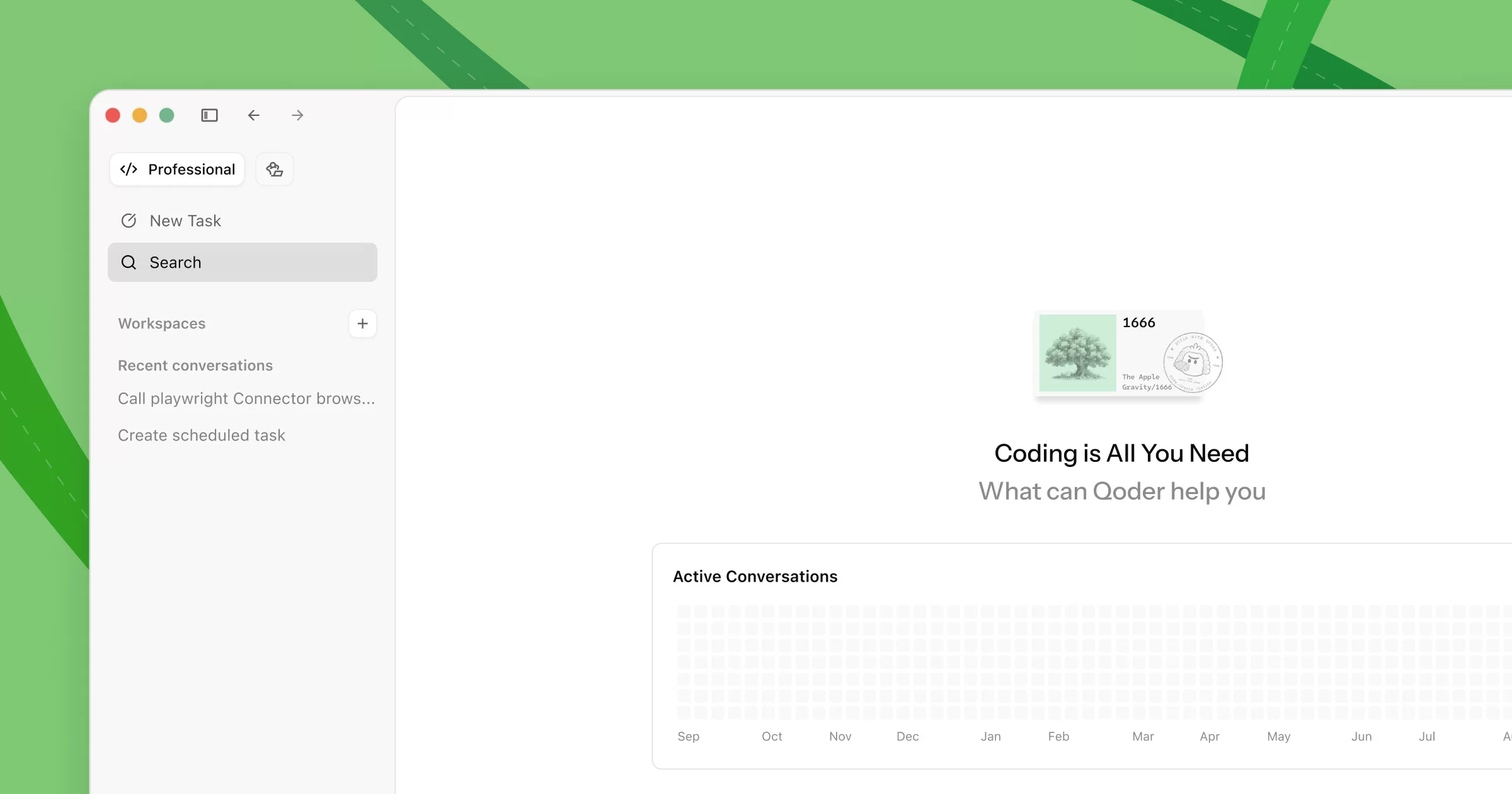
Qoder: describe the task, let the agent plan, code and test
Qoder is Alibaba's AI agent programming platform, built around what its authors call conversational coding. Instead of typing every implementation line yourself, you describe the task in natural language and Qoder breaks the requirement down, plans the changes, writes the code and runs the tests. Long-running tasks can be delivered asynchronously, so you come back to a finished result instead of waiting at the screen.
Where a traditional completion tool works one line at a time, Qoder's unit of work is a whole task. It is built on a large language model and can both read and write code, and it maintains a three-layer memory system covering personal habits, project rules and conversation history. Each later session therefore builds on what it already knows about the project and about you.
Main capabilities
Conversational coding: describe a task in natural language and Qoder handles planning, implementation and testing, leaving you the judgement calls that matter.
Whole-project understanding: it reads the architecture and history of the entire project, which makes its completions and refactoring suggestions fit the surrounding code instead of standing alone.
Multi-language support: Python, TypeScript, Go, Java and other languages are supported, which suits teams with a mixed stack.
Completion and refactoring: it completes code intelligently and can plan and execute changes that span multiple files.
Q&A and learning: in Ask mode it answers code questions, and because its steps stay visible, you can learn its approach rather than just copying its output.
Transparent operation: progress is tracked live, so you can inspect each step and see why a change was made.
Two collaboration modes: Chat handles short tasks interactively; Quest runs long tasks asynchronously.
Tool invocation: built-in abilities such as running test commands and connecting to databases let it actually execute, not just suggest.
Team collaboration: the team edition adds an admin dashboard, SSO support and consolidated billing.
How to use it
- Open the project and let Qoder build an understanding of the directory structure, dependencies and code history.
- State the task boundary clearly, for example "add input validation to the user module and cover it with tests".
- Pick a mode: iterate live in Chat for short work, or hand a long job to Quest and let it run.
- Review its operation log and change list before letting it continue.
- Check the test results and the diff, and read the code yourself before merging.
Where it fits
- Feature work and multi-file refactoring in an existing repository
- Adding tests and batch-editing repetitive code
- Questions and onboarding in an unfamiliar codebase
- Teams spanning several languages that want one collaboration style
Limitations and cautions
- The source material provides no specific model version, pricing plan or free allowance, so check the official description for the real limits.
- No verifiable product website was confirmed in the material, so no images or external links appear here.
- Output still needs human review; passing tests does not prove the logic is correct.
- For wide automatic changes, verify on a separate branch before merging.
- Whether it can reach a database depends on your environment and permissions.
Frequently asked questions
Who is Qoder for?
It suits developers who want to hand repetitive coding to an AI by describing the task in natural language, and teams that need bulk completion, refactoring, added tests or a quick way to understand an unfamiliar codebase. It also helps when a stack spans Python, TypeScript, Go and Java.
What is the difference between Chat and Quest mode?
Chat is meant for short tasks that need immediate back-and-forth, while Quest runs longer tasks asynchronously and delivers the result when it is done. The difference is task size, not capability.
How does Qoder's memory work?
It keeps three layers: personal habits, project rules and conversation history. These accumulate your coding preferences and project conventions so later work fits the codebase instead of guessing.
Can I ship the generated code as is?
Not recommended. Generated code still needs human review: passing tests does not guarantee the logic is right. For large automatic changes, verify on a separate branch before merging.