
Lianqi AI suits business professionals who need to look up commercial information quickly with source citations, process large volumes of tender notices daily and screen out key points fast, track industry developments continuously, or prepare bid materials while reducing verification time.
Lianqi AI: An AI Business Search and Bid Writing Application Built for Business Scenarios
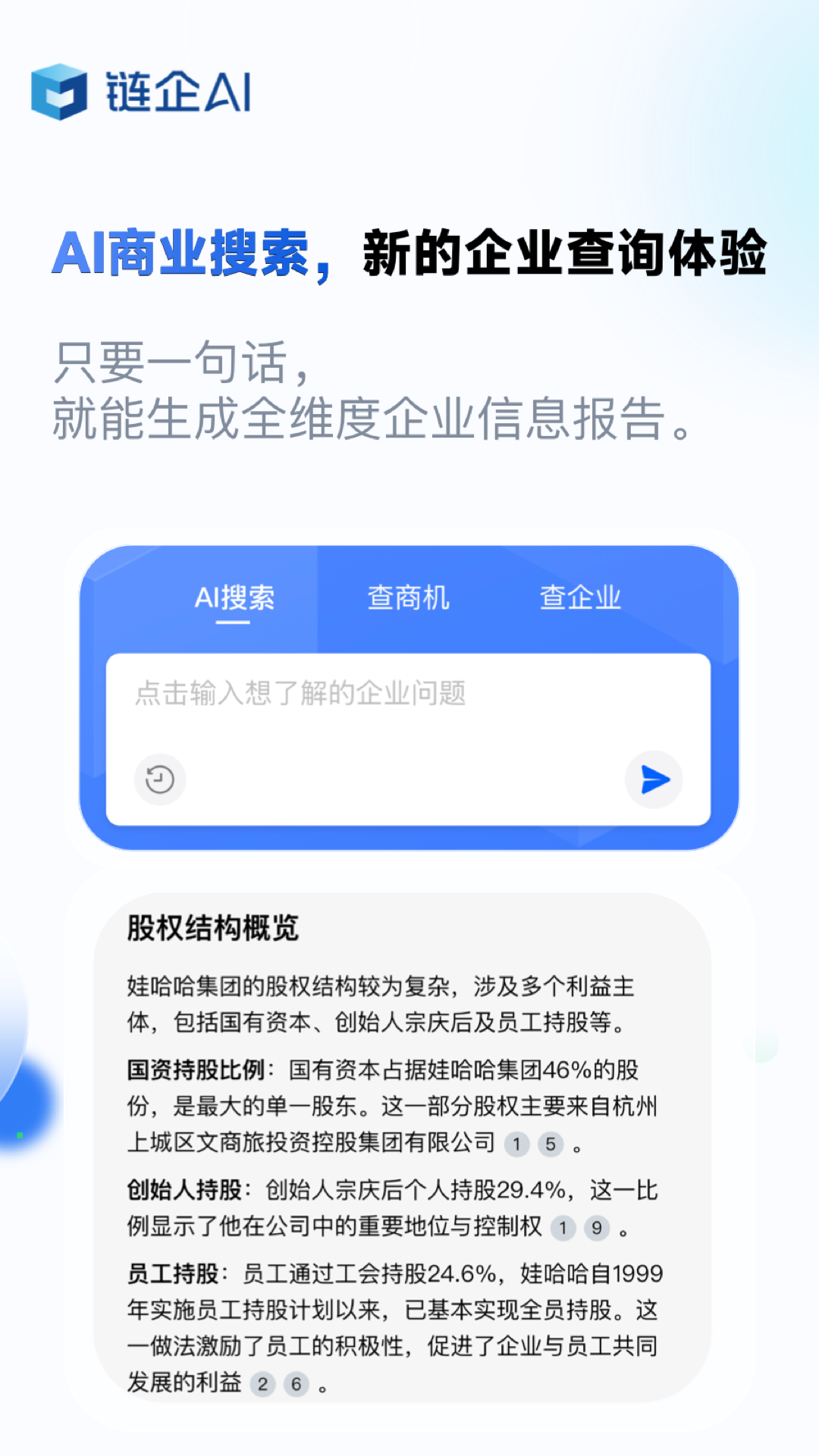
Lianqi AI is an AI business search and bid writing application for business scenarios, built on a proprietary in-house large language model. It targets three specific bottlenecks that business professionals run into when gathering information: research takes too long, there are far more tender notices than anyone can read, and bid documents still have to be produced. Its approach is divided into three matching parts — AI Business Search answers business questions directly and supplies data source citations; AI Opportunity Reading processes large batches of tender notices in a short time and summarizes potential opportunities and key points; and a personalized Business Daily pushes customized intelligence according to each user's preferences. Together these three capabilities form a single chain that runs from finding information, to filtering opportunities, to continuous tracking. A clean interface and straightforward operation are its baseline experience advantages.
Main Features
AI Business Search Based on a proprietary in-house large language model, it answers business questions accurately and supplies data source citations quickly. The citation feature matters a great deal in real use — commercial information without a stated origin is very difficult to rely on directly when making decisions.
AI Opportunity Reading Under specific test conditions, it can deeply understand 100 tender notices in about 30 seconds, with no complicated operation required, and it summarizes potential opportunities and key points. Tender notices are a typical content type with high information density, strong time sensitivity, and a high manual screening cost, so the real value of batch understanding is turning "reading each one line by line" into "reading summaries."
A Personalized Business Daily It pushes privately customized business intelligence every day according to user preferences, helping you understand market trends and industry conditions more comprehensively. Its role is to shift information gathering from active searching to passive receiving, and the precondition is that preferences are configured accurately enough.
Steps to Use
- Define the research target: Write the question as a concrete business question rather than a broad keyword, and the results will stay closer to what you actually need.
- Review the source citations: When using AI Business Search, check the data sources shown at the same time, and trace back to verify information that carries real weight.
- Read tender notices in batches: Hand the current batch of tender notices to AI Opportunity Reading, and concentrate on the potential opportunities and key items it summarizes.
- Investigate priorities in depth: For the opportunities flagged by the AI, return to the original tender notice to confirm hard requirements such as qualification criteria and deadlines.
- Set personal preferences: Configure the preference scope of the Business Daily so that pushed content matches the industries and fields you follow.
- Combine it with bid writing: When using the bid writing capability, feed in information you have already verified as source material, which reduces repeated checking.
- Keep human judgment: The AI gives you leads and a first draft, but the final decision and the content you submit still have to be checked by you.
Suitable Scenarios
- Research scenarios where you need to understand the answer to a business question quickly and require sources
- Business roles that handle a large volume of tender notices every day and need to screen out key points in a short time
- Practitioners who need to track industry developments and market trends continuously
- People who need to write or prepare bid materials and want to cut down on time spent searching for information
- Teams whose commercial information is scattered and who lack a stable source of information
Limitations and Things to Note
- AI answers are generated by the model. Commercial data and conclusions still need to be traced back to the original sources and cannot be used directly as a basis for decisions.
- Tender notice summaries depend on model comprehension and may omit critical clauses such as qualification requirements and deadlines, so you must return to the original text to confirm.
- The quality of Business Daily pushes depends on the preference settings; an inaccurate configuration increases information noise.
- AI bid writing produces draft content, and its professionalism and compliance still require human review.
- Efficiency figures are statements made under specific testing conditions, and actual results depend on how you phrase questions and on the quality of the material you provide.
Frequently asked questions
What are the main features of Lianqi AI?
There are three main ones. AI Business Search answers business questions accurately and supplies data source citations quickly. AI Opportunity Reading understands large volumes of tender notices in a short time and summarizes potential opportunities and key points. The personalized Business Daily pushes customized business intelligence every day according to user preferences. Together they form a chain from finding information and filtering opportunities to continuous tracking.
Can business information obtained from Lianqi AI be used directly as a basis for decisions?
No. AI answers and tender notice summaries are model-generated, so commercial data and conclusions still need to be traced back to the original source. Hard clauses such as qualification requirements and deadlines must be confirmed in the original text. The quality of daily pushes also depends on whether preferences are configured accurately.
When is the bid writing capability of Lianqi AI useful?
It generates draft content, so it works well once the research has been done: you can turn information you have already verified into source material and form a first draft quickly, reducing repeated verification. Professionalism and compliance still require human review, and the content finally submitted should be confirmed by you.