
Gaoyi AI Rate Reducer is a paid tool for academic text that rewrites phrasing to lower AI-detection scores and similarity rates. It takes DOC, DOCX and TXT uploads, offers AI-score, similarity or combined processing at CNY 3.33 to 4.99 per thousand characters, and returns a report, but it cannot guarantee a pass on your institution's system and carries academic-integrity risk.
Gaoyi AI Rate Reducer: Rewriting Academic Text to Lower AI Scores and Similarity, Price and Risks
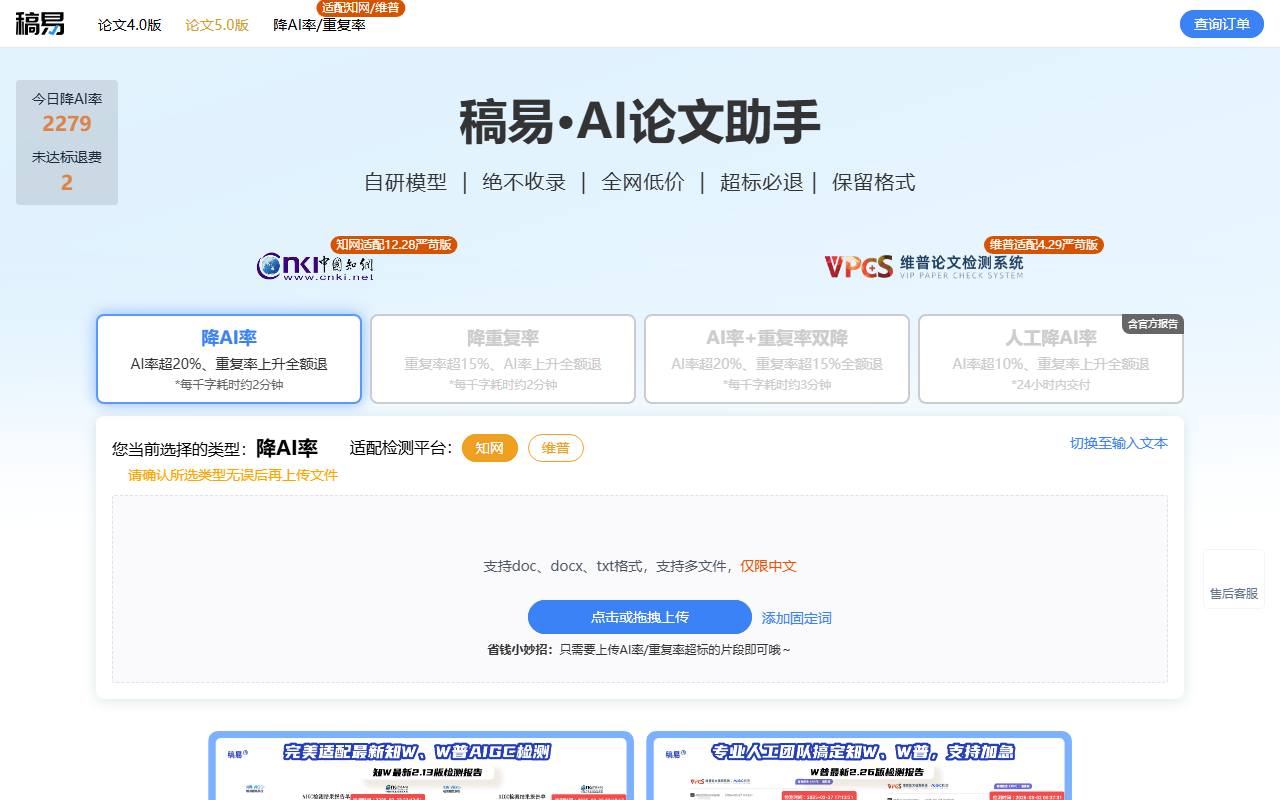
Gaoyi AI Rate Reducer is a paid rewriting service aimed at academic manuscripts. It does not write for you; it takes a finished draft and rewrites sentence structure, vocabulary and phrasing so the text reads more like natural human writing, with the goal of lowering the AI-detection score and the similarity rate reported by checking systems. Word, DOCX and TXT files are accepted, and the vendor states compatibility with mainstream Chinese detection platforms.
The service targets one specific step in the academic workflow: after the draft is finished, the author submits it for checking, receives an AI score and a similarity score, and then rewrites sentence by sentence if either figure is too high. Gaoyi turns that step into a paid pipeline: upload or paste the text, pick AI-score reduction, similarity reduction or both, pay, and receive the rewritten text with a report attached.
Throughput is quoted at roughly two minutes per thousand characters, and billing runs per thousand characters rather than per thousand words, which matters for mixed Chinese and English manuscripts. A manual rewriting tier exists for harder cases, claimed to push the AI score below ten percent with delivery inside 24 hours, and the vendor promises a full refund if the AI score stays above 20 percent or the similarity rate rises.
What the service does
Lowering the AI score
The rewrite adjusts sentence structure, word choice and the order of clauses so machine-generated passages read closer to human prose. The work is about rhythm and syntactic variety rather than swapping synonyms.
Lowering similarity
Passages that overlap with existing literature are rephrased to break up long matching strings. In academic writing the literature review and citation-heavy sections are where this is needed most.
Both metrics at once
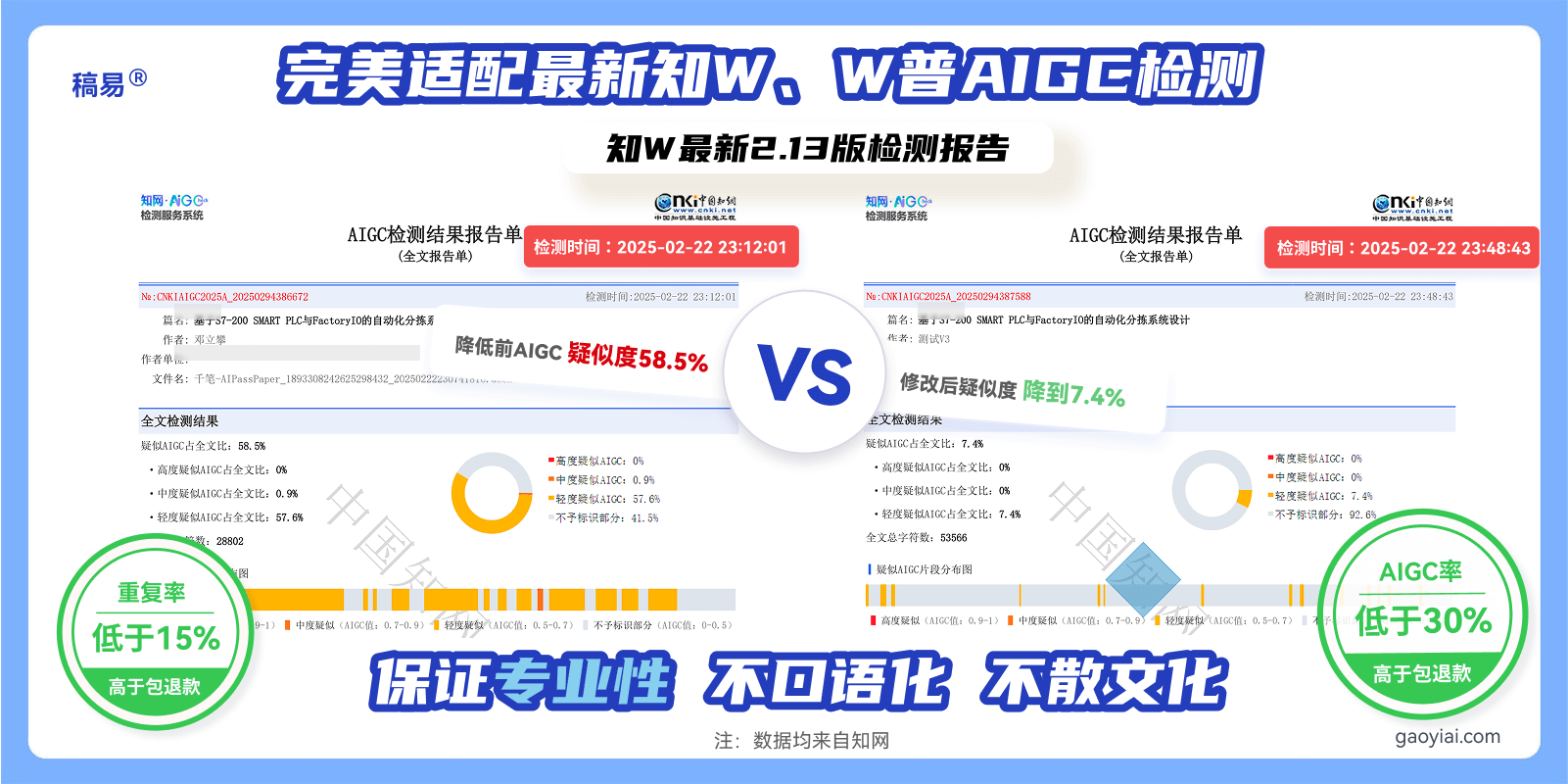
Handling AI score and similarity in one pass avoids a common side effect: rewriting purely to beat AI detection often pushes the similarity rate up.
Formats and detection fit
DOC, DOCX and TXT uploads are supported, the vendor claims compatibility with mainstream Chinese detection platforms, and a report is returned so the author can check the result.
Manual tier and refund promise
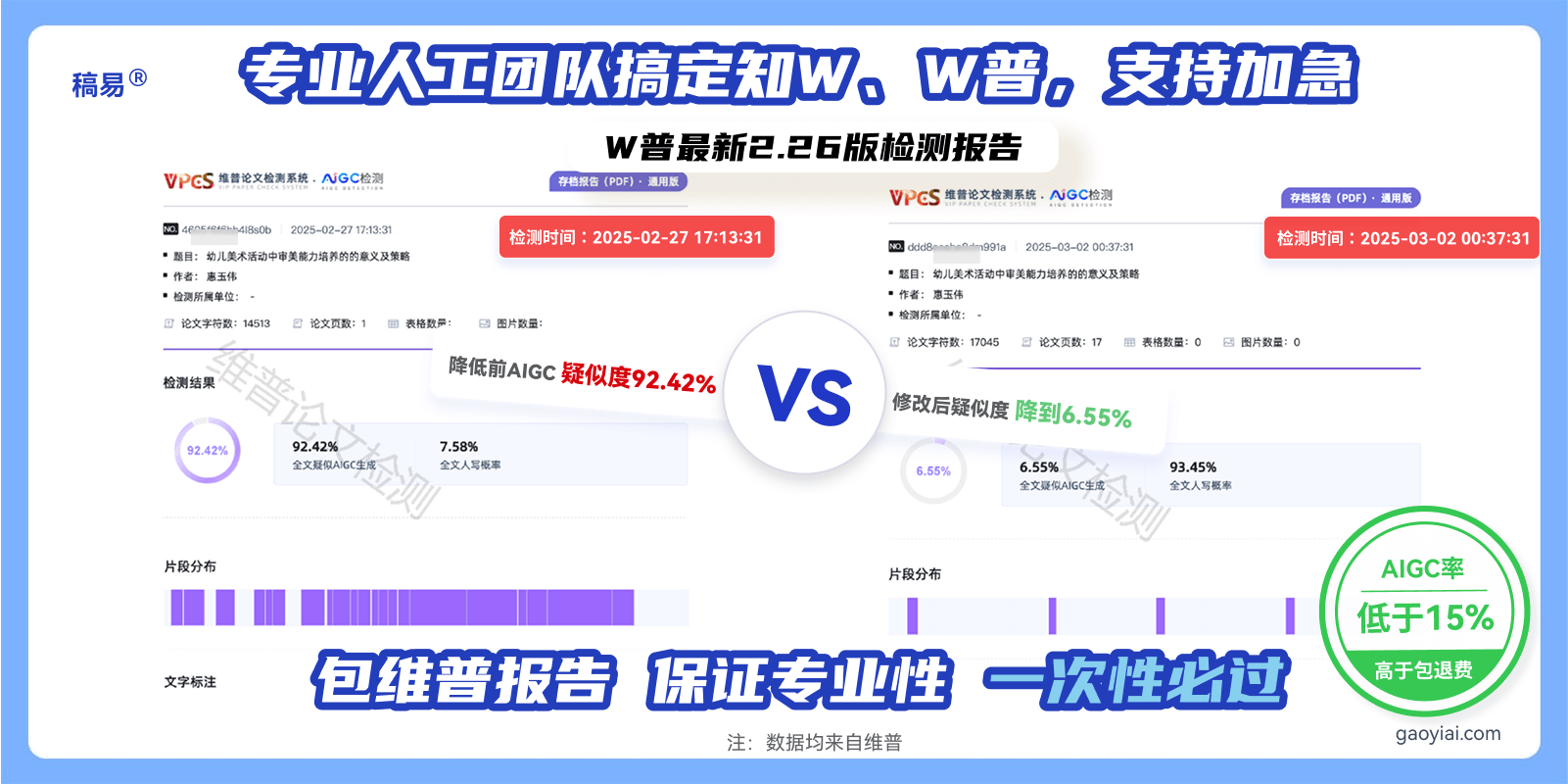
Complex manuscripts can be routed to human editors, and the vendor promises a refund when the AI score stays above 20 percent or similarity increases. How that promise is judged depends on the service terms and on which system produced the numbers.
How it works
- Open the site and choose AI-score reduction, similarity reduction, or the combined service.
- Upload a DOC, DOCX or TXT file, or paste the text directly.
- Confirm the text and pay the fee for the character count.
- Wait for processing, then download the rewritten text and the report.
- Read it through for logical flow, terminology accuracy and natural grammar, correcting by hand where needed.
- Re-submit to the detection platform you actually have to satisfy; if the figure is still too high, contact support.
Pricing
- AI-score reduction: CNY 3.33 per thousand characters.
- Similarity reduction: CNY 3.33 per thousand characters.
- Combined service: CNY 4.99 per thousand characters.
- The manual rewriting tier is quoted per manuscript; no standard price list is published.
- Billing is per thousand characters, not per thousand words, so mixed-language manuscripts cost differently from a word-count estimate.
Who it is aimed at
- Students and researchers with a finished draft who only need the two detection figures pushed below a threshold.
- Graduating students facing a deadline who need large sections processed quickly.
- Writing support teams handling several manuscripts at once and wanting a report on file for each.
Risks to know first
- Academic integrity comes first: many universities and journals treat evading AI detection as misconduct in itself, so using a service like this can trigger a finding against the author, who bears the consequences alone.
- Detection systems keep changing, and the compatibility claim is only a vendor statement; no rewrite can be guaranteed to pass a third-party check.
- Machine rewriting can blunt technical terminology and weaken argument chains. Formula-heavy, legal or data-driven passages are especially exposed and must be reviewed line by line.
- The refund promise depends on the vendor's own report and thresholds, so it may not apply when your institution uses a different system or version.
- Costs add up on long theses because billing is per thousand characters, and the manual tier has no published price, so confirm the budget in advance.
- Uploading unpublished work raises confidentiality and priority questions. The vendor mentions encrypted transfer and secure storage but does not disclose server location, retention period or deletion, so anonymise sensitive material first.
Frequently asked
Will it guarantee my paper passes the university check?
No. The vendor only claims compatibility with mainstream platforms and a refund when the figure misses the target, while every institution uses its own system, version and threshold.
Do I still need to review the output?
Yes. The rewrite mainly changes syntax and wording, and terminology, figures and argument chains can drift, so a section-by-section read is essential.
What does it cost?
CNY 3.33 per thousand characters for AI-score or similarity reduction, CNY 4.99 for the combined service, with the manual tier quoted separately.
Is using it academically dishonest?
That depends on your institution's rules. Many explicitly forbid rewriting done to evade detection, so check your own regulations first; the risk sits with the author.
Frequently asked questions
Will it guarantee my paper passes the university check?
No. The vendor only claims compatibility with mainstream platforms and a refund when the figure misses the target, while every institution uses its own system, version and threshold.
Do I still need to review the output?
Yes. The rewrite mainly changes syntax and wording, and terminology, figures and argument chains can drift, so a section-by-section read is essential.
What does it cost?
CNY 3.33 per thousand characters for AI-score or similarity reduction, CNY 4.99 for the combined service, with the manual tier quoted separately.
Is using it academically dishonest?
That depends on your institution's rules. Many explicitly forbid rewriting done to evade detection, so check your own regulations first; the risk sits with the author.